

LITIGATION STRATEGY | DEPOSITION PRACTICE | ATTORNEY-CLIENT PRIVILEGE | FEDERAL PROCEDURE | FLORIDA LAW
Federal rules and courts across the country remain divided on whether attorneys may confer with client-witnesses during deposition breaks.
Published: August 18, 2025
Primary Case Law: Hall v. Clifton Precision; In re Stratosphere Corp. Sec. Litig.; Potashnick v. Port City Const. Co.; Ngai v. Old Navy; Plaisted v. Geisinger Med. Ctr.
Primary Statutes & Rules: Fed. R. Civ. P. 30(c)(1); Fed. R. Evid. 615; The Florida Bar Guidelines for Professional Conduct F-8
Jurisdiction: Federal Civil Procedure / Federal District Courts Nationwide
The Dilemma of the Deposition Break
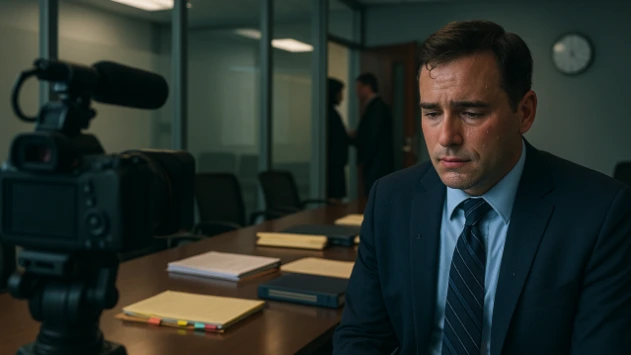
You are deposing a key witness in your case and you have him on the run. You have caught him in several blatant lies, even ones contradicted by the witness’s own emails. He’s literally sweating now, which is being captured on the video camera recording the deposition. Your opposing counsel finally interjects, asking to take a short break. Upon returning, your opposing counsel mentions that “her client would like to clarify a few things.”
Of course, you suspect what has happened during the break. Opposing counsel has coached the witness, suggesting ways he might be able to gracefully walk back his prior testimony or twist it into something different. The questions enter your mind: is such a witness conference allowed? If not, what can I do about it?
Can a Lawyer Confer With a Client During a Deposition Break?
Unfortunately, when it comes to witness conferences during depositions, the law is as clear as mud. It varies wildly from federal district to federal district and, even within federal districts, from federal judge to federal judge. Still, from a purely law-based standpoint, one can make a better argument that deponent-lawyer conferences should generally be allowed. This article will make that case first and then discuss the contrary case.
The Case for Lawyer-Deponent Conferences
Federal Rules of Civil Procedure and Trial Analogy
Again, we start with the text of the rules. Unlike with objections, the Federal Rules of Civil Procedure do not expressly speak to the question of deponent-lawyer conferences during depositions. But, once again, a lawyer can rely, in part, on the general rule already discussed above: “[t]he examination and cross-examination of a deponent proceed as they would at trial[.]” Fed. R. Civ. P. 30(c)(1). This naturally gives rise to another question: at a civil trial, and its progeny. is a lawyer allowed to confer with his or her client during a break in the trial, whether that break occurs during direct-examination or cross-examination?
Misconceptions Regarding Federal Rule of Evidence 615
Although many trial lawyers would confidently answer that question “no,” most would have difficulty identifying legal support for their answer. That is because there is no federal rule of procedure, evidence, federal circuit case, or U.S. Supreme Court case that expressly prohibits a lawyer from talking to his or her client/witness while that client/witness is under either direct-examination or cross-examination.
Notably, in arguing that “in trial” lawyer-witness conferences are inappropriate, lawyers often cite Federal Rule of Evidence 615, known by many trial lawyers as “The Rule.” But, as the plain text of the rule makes clear, Rule 615 bars trial witnesses from listening to other witnesses testify. The Rule reads: “At a party’s request, the court must order witnesses excluded so that they cannot hear other witnesses’ testimony. Or the court may do so on its own.” Fed. R. Evid. 615.
Constitutional Protections and Potashnick v. Port City Const. Co.
Indeed, contrary to conventional wisdom, the most persuasive authority on this issue—Potashnick v. Port City Const. Co.—held that, in a civil trial, a lawyer is allowed to confer with his client during breaks in the client’s trial testimony. 609 F.2d 1101, 1117 (5th Cir. 1980). In fact, the Fifth Circuit held that a client has a constitutional right to confer with his lawyer during such breaks. Because the trial court in Potashnick had prohibited such communications, the Fifth Circuit reversed the judgment. The court wrote: “Our analysis of the fifth amendment to the United States Constitution establishes that a civil litigant has a constitutional right to retain hired counsel. Because the prohibiting of communication between a testifying party-witness and his attorney during an overnight recess in the party-witness’ testimony impinges on that constitutional right, we are compelled to reverse.” Id. at 1104. Given the plain text of Federal Rule of Civil Procedure 30(c)(1), the reasoning of Potashnick should apply with equal force in the deposition context.
Permissible Circumstances Under In re Stratosphere Corp.
As far as deponent-lawyer conferences in the deposition context, the keystone case is In re Stratosphere Corp. Securities Litigation. 182 F.R.D. 614 (D. Nev. 1998). Although the Stratosphere Corp. court did not endorse unrestricted deponent-lawyer conferences during a deponent’s deposition testimony, it permitted such conferences to occur under certain circumstances. The court wrote:
“This Court will not preclude an attorney, during a recess that he or she did not request, from making sure that his or her client did not misunderstand or misinterpret questions or documents, or attempt to help rehabilitate the client by fulfilling an attorney’s ethical duty to prepare a witness. So long as attorneys do not demand a break in the questions, or demand a conference between question and answers, the Court is confident that the search for truth will adequately prevail.” Id.at 621.
Ethical Boundaries and The Florida Bar Guidelines
Of course, even if your court allows deponent-lawyer conferences, you must ensure that your conferences stay within ethical boundaries. For example, the Florida Bar’s Guidelines for Professional Conduct say that “[w]hile a question is pending, counsel should not coach the deponent nor suggest answers, through objections or otherwise.” The Florida Bar, Guidelines for Professional Conduct F-8 (2008).
The Case Against Lawyer-Deponent Conferences
The Strict Approach of Hall v. Clifton Precision
The flip side of this authority are cases that expressly preclude deponent-lawyer deposition conferences. The hallmark case in this camp is Hall v. Clifton Precision, a case that has been cited over 156 times in judicial opinions. 150 F.R.D. 525 (E.D. Pa. 1993). In Hall, Judge Gawthrop ordered that “counsel and their witness-clients shall not engage in private, off-the-record conferences during depositions or during breaks or recesses, except for the purpose of deciding whether to assert a privilege.” Id. at 531–532.
Local Rules Across Federal Districts
Notably, a number of federal districts have enacted local civil rules that expressly address deponent-lawyer conferences. Two federal districts, the U.S. District Court for the District of South Carolina and the U.S. District Court for the District of Delaware, have effectively codified the Hall rule in their local rules. D.S.C. Civ. R. 30.05(E); D. Del. R. 30.6. Another federal district, the U.S. District Court for the Southern District of New York, is less restrictive of conferences, only barring private conferences between a defending attorney and a witness “while a deposition question is pending, except for the purpose of determining whether a privilege should be asserted.” S.D.N.Y. R. 30.4.
Of course, it is critical that, prior to any deposition you take or defend, you consult the local rules of the federal district court where your case is pending.
Inquiring Into the Substance of Improper Conferences
If I’m in a jurisdiction that prohibits deponent-lawyer conferences, can I inquire into the substance of the conference?
A related question is whether, if you’re practicing before a court or in a district that prohibits deponent-lawyer conferences and such a conference occurs, you may ask the witness to disclose the substance of that conference. Numerous cases suggest that the answer is “yes,” effectively providing a mechanism for enforcing the “no conference” rule. Ngai v. Old Navy, No. CIV.A. 07-5653-KSH-PS, 2009 WL 2391282, at *4 (D.N.J. July 31, 2009) (“[I]f an off-the-record conference occurs between the deponent and her counsel about a topic other than to discuss asserting a privilege, then the discussion is not protected by the attorney-client privilege and a ‘deposing attorney is [ ] entitled to inquire about the content thereof.’”) (alteration in original); Plaisted v. Geisinger Med. Ctr., 210 F.R.D. 527, 535 (M.D. Pa. 2002) (“[W]e think it is proper to allow plaintiffs’ counsel to question Brown about any discussion that took place during the two breaks.”). Given the seriousness of waiving the attorney-client privilege, federal district and federal judge specific research is essential here.
LEGAL DISCLAIMER: This blog post is provided for general informational and educational purposes only. It does not constitute legal advice and does not create an attorney-client relationship. The law is subject to change, and the application of legal principles varies depending on the specific facts of each case. If you have questions about your specific situation, you should consult a licensed Florida attorney. This post discusses legal concepts and principles addressed in the cited case(s). It is not intended to make any assertions about the truth of any allegations or evidence relating to any party to that case.
Citations & Sources
-
Potashnick v. Port City Const. Co., 609 F.2d 1101 (5th Cir. 1980)
-
In re Stratosphere Corp. Sec. Litig., 182 F.R.D. 614 (D. Nev. 1998)
-
Hall v. Clifton Precision, 150 F.R.D. 525 (E.D. Pa. 1993)
-
Ngai v. Old Navy, No. CIV.A. 07-5653-KSH-PS, 2009 WL 2391282 (D.N.J. July 31, 2009)
-
Plaisted v. Geisinger Med. Ctr., 210 F.R.D. 527 (M.D. Pa. 2002)
-
The Florida Bar, Guidelines for Professional Conduct F-8 (2008)
