
Overview
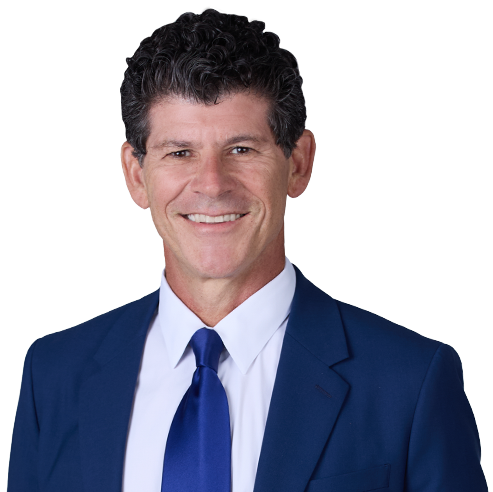
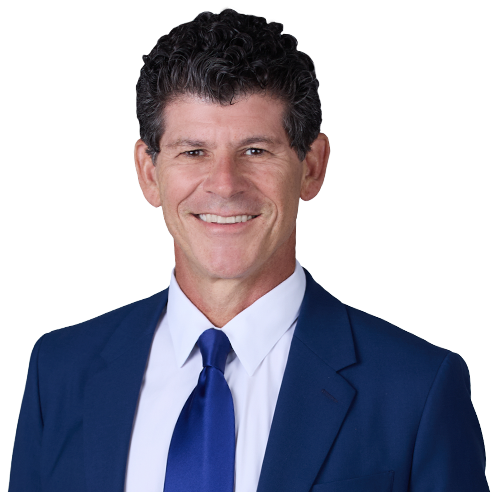
As a trial and appellate lawyer for more than thirty years, Scott Srebnick has earned a reputation as a “lawyer’s lawyer.” Colleagues frequently turn to him when a case becomes especially complex. Prior to joining Maderal Byrne & Furst as Of Counsel in 2024, Scott represented numerous professionals across South Florida and the United States. His clients have included lawyers, bankers, and corporate executives facing serious felony charges.
Extensive White-Collar and Commercial Litigation Experience
Scott has handled a wide variety of white-collar offenses. These complex cases include fraud, money laundering, public corruption, extortion, and racketeering. Moreover, his practice extends far beyond criminal trials and appeals. His experience also includes grand jury matters, extradition hearings, civil forfeiture actions, SEC enforcement proceedings, and complex commercial litigation.
Elite Legal Education and Landmark Supreme Court Victories
In 1987, Mr. Srebnick received his B.A. in Economics from Amherst College, graduating magna cum laude. He also earned the James R. Nelson prize for his senior thesis. After achieving a perfect score on the LSAT, he attended Harvard Law School and graduated cum laude. He subsequently launched his practice in 1992, winning a new federal trial for a former classmate in Philadelphia.
Notably, Mr. Srebnick co-authored the appellate briefs that resulted in a landmark 2016 United States Supreme Court decision. In Luis v. United States, the Court held that the pretrial restraint of untainted assets needed to retain legal counsel violated the Sixth Amendment. As a result of this massive victory, the Daily Business Review named him the Most Effective Lawyer in the Appellate category.
National Recognition and Legal Leadership
Super Lawyers Magazine consistently recognizes Mr. Srebnick as one of the Top 100 lawyers in Florida across all combined categories. Additionally, Chambers USA has noted that Mr. Srebnick “has built a national practice consisting of criminal trials and appellate cases”. They also praise his ability to stand up to much larger legal teams and emerge “head and shoulders above in terms of research, writing, and presentation.” Commentators frequently attribute his success to his smooth, gracious style and clear arguments. Chambers USA goes on to describe Mr. Srebnick as “a fantastic appellate lawyer, completely familiar with the nuances of criminal appeals and thoroughly dedicated to his clients.”
Furthermore, Scott is committed to shaping the next generation of legal minds. Since 2001, Mr. Srebnick has both taught and guest-lectured at a seminar at the University of Miami School of Law, entitled Criminal Prosecution and Defense Lawyering: Zealous Advocacy and Situational Ethics. He has also been a frequent lecturer at seminars across the country on a variety of pertinent topics in criminal law.
Bar Admissions
- State of Florida
- State of New York
- United States Supreme Court
- United States Court of Appeals, First Circuit
- United States Court of Appeals, Second Circuit
- United States Court of Appeals, Third Circuit
- United States Court of Appeals, Sixth Circuit
- United States Court of Appeals, Eighth Circuit
- United States Court of Appeals, Ninth Circuit
- United States Court of Appeals, Eleventh Circuit
- United States District Court, Southern District of Florida
- United States District Court, Middle District of Florida
- United States District Court, Northern District of Florida
- United States District Court, Southern District of New York
- United States District Court, Eastern District of New York
- United States District Court, District of Puerto Rico
Education
- J.D., Harvard Law School, cum laude 1990
- B.A., Amherst College, magna cum laude 1987
Federal Clerkship
- Hon. Sidney M. Aronovitz, U.S. District Court, Southern District of Florida
Community Involvement
- Florida Federal Judicial Nominating Commission
- Member (2005-2009)
- National Association of Criminal Defense Lawyers
- Life member (1995-present)
- Co-Chair, Federal Circuit Oral Argument Committee (2002-2007)
- Vice-chair, Rules of Procedure Committee (1998-2005)
- Columnist, Fourth Amendment Forum (1991-97)
- Recipient, President’s Commendation Award
- Ad Hoc Committee on Rules and Procedures (Southern District of Florida)
- Member (2007-2015)
- Volunteer, Put Something Back Pro Bono Project
- Big Brothers Big Sisters of Greater Miami
- Board Member (2004-2010)
- Big Brother (2001-2007)
- Board of Trustees, Ransom Everglades School (2016-present)
- Team Leader, Cycle for Survival (2013-present)
Representations
Trial Court
- State v. Dean (Fla. Cir. Ct. Broward) Obtained pretrial dismissal of case against a prominent lawyer charged with extortion in connection with settlement negotiations on behalf of three clients.
- State v. Esquivel (Fla. Cir. Ct. Dade) Obtained pretrial dismissal of all charges, including racketeering, against Wackenhut executive accused of over-billing municipality for transportation security.
- State v. Herrera, 324 F.R.D. 258 (S.D.Fla. 2017) Principal author of motions that resulted in landmark decision that a law firm waives work product protection in witness interview notes when it provides “oral downloads” of those notes to the SEC.
- United States v. Castroneves (S.D.Fla.) Co-counsel for sister of three-time Indy 500 champion, both of whom were charged with tax evasion. Both defendants were acquitted by a Miami jury after a seven week-jury trial.
- United States v. Leason (D.P.R.) Obtained a pretrial dismissal of money laundering charges against businessman in Puerto Rico after defense investigation exposed significant doubts about credibility of government’s star witness.
- United States v. Graham (E.D.Mich.) Obtained settlement of criminal forfeiture case in favor of wife of Michigan business executive convicted of fraud and tax charges.
- United States v. Caceres (S.D.Ga.) Obtained an acquittal from a Savannah, Georgia jury on all charges, including federal RICO and RICO conspiracy, for a defendant charged in one of the largest health care fraud cases in the United States.
- State v. Tolson (Fla. Cir. Ct.) Obtained the dismissal of state RICO charges against defendant charged in the Stadium Naples corruption case in Naples, Florida.
- United States v. Taylor (S.D.Fla.) Co-counsel for lawyer charged with money laundering and filing false IRS 8300 forms in connection with receipt of attorney’s fees from alleged narcotics trafficker. Two trials ended in hung jury. All felony charges dismissed.
- United States v. Proceeds (D.P.R.) Successfully obtained return of the entire sum of $356,000 seized from clients in connection with civil forfeiture case in the District of Puerto Rico.
- United States v. Grigsby (S.D.Fla.) Won a mid-trial judgment of acquittal by the district court on all charges for municipal banker charged in Port of Miami corruption case by exposing the government’s flawed theory of prosecution.
- United States v. Grigsby (S.D.Fla.) Co-counsel for municipal banker acquitted by jury of all charges relating to alleged bribery of county commissioner.
- United States v. Abbell (S.D.Fla.) Co-counsel at first trial for former Justice Department lawyer charged with RICO, money laundering, and obstruction of justice, in the “Cali Cartel” case. Trial ended in acquittal of substantive RICO and hung jury on remaining charges.
- United States v. DeForrest (S.D.Fla) Successfully negotiated a no-jail plea for a radio sports personality charged in federal court with “honest services” fraud.
- United States v. Diaz (S.D.NY) Obtained a 4 month sentence in the Southern District of New York for businessman convicted by a jury of illegal money transmitting and international money laundering, despite sentencing guidelines range of 151-188 months.
Appeals
- United States v. Lopez-Vanegas, 493 F.3d 1305 (11th Cir. 2007) Obtained reversal of conviction and sentence and dismissal of indictment of real estate broker convicted of narcotics conspiracy in the “Saudi Prince” drug case.
- United States v. Smith, 454 F.3d 707 (7th Cir. 2006) Obtained reversal of defendant’s sentence in Eastern District of Wisconsin based on district court’s failure to properly consult the federal sentencing guidelines.
- United States v. Gonzalez, 140 Fed. Appx. 170 (11th Cir. 2005)
Obtained reversal of one count of conviction and vacatur of entire sentence based on the district court’s improper exclusion of defense evidence. - United States v. Puche, 350 F.3d 1137 (11th Cir. 2003) Obtained reversal of defendant’s sentence for money laundering based on incorrect application of the sentencing guidelines.
- Hardy v. Rundle, 846 So.2d 1174 (2nd DCA 2003) Filed successful petition for writ of quo warranto in the Second District Court of Appeal of Florida to preclude specially-assigned prosecutor from overstepping her legal authority to charged defendants with money laundering in Stadium Naples case.
- United States v. Miranda (11th Cir. 2001) (unpublished) Obtained reversal of defendant’s sentence for money laundering based on incorrect application of federal sentencing guidelines.
- Rosemond v. Menifee, 137 F.Supp.2d 270 (S.D.N.Y. 2000) Obtained reversal in Southern District of New York of Federal Bureau of Prisons’ refusal to grant defendant credit for time in state custody while on writ of habeas corpus ad prosequendum.
- United States v. Mills, 138 F.3d 928 (11th Cir. 1998) Obtained reversal of defendant’s sentence for false statements based on incorrect application of the sentencing guidelines.
- United States v. Christo, 129 F.3d 578 (11th Cir. 1997) Obtained reversal of defendant’s sentence for money laundering based on argument that the money laundering statute did not criminalize the conduct charged.
- State v. Phillippoussi, 691 So.2d 511 (4th DCA 1997) Obtained reversal of grand theft conviction based on trial court’s failure to properly instruct on good faith defense.
- United States v. Garces (11th Cir. 1995) (unpublished) Obtained reversal of defendant’s sentence based on district court’s consideration of improper factors when imposing sentence.
- United States v. Moskovits, 815 F.Supp. 147 (E.D. Pa. 1993) & 844 F.Supp. 202 (ED Pa. 1993) Won a new trial on a habeas corpus petition for a University of Pennsylvania student charged with operating a continuing criminal enterprise involving cocaine trafficking based on the denial of his constitutional right to testify.
- State v. Gonzalez, 578 So.2d 729 (3d DCA 1991) Obtained reversal and suppression of evidence based on illegal search and seizure, in violation of Fourth Amendment.
U.S. Supreme Court
- Luis v. United States, 136 S.Ct. 1083 (2016) Co-author of appellate briefs for landmark Supreme Court decision holding that the pretrial restraint of assets untainted by crime that are needed to retain counsel of choice violates the Sixth Amendment