

PERSONAL INJURY | PREMISES LIABILITY | SLIP AND FALL | CONSTRUCTIVE NOTICE | FLORIDA LAW UPDATE
A recent appellate decision shows how difficult it can be to prove a government entity had “constructive notice” of a hazardous condition that caused your injury.
Published: September 17, 2026
Case: Miami-Dade County v. Martin
Court: Florida Third District Court of Appeal
Decision Date: December 10, 2024
The Applicable Law
When you suffer an injury on property in Florida, proving a hazard caused your fall is not enough. You must also prove the person who controlled the property knew or should have known about the danger.
Florida law requires plaintiffs in slip or trip and fall cases against defendants to establish that the defendant had “actual or constructive notice” of the dangerous condition. According to the court in Wilson-Greene v. City of Miami, “Constructive notice may be shown by presenting evidence that the condition existed for such a length of time that in exercise of ordinary care, the defendant should have known of the condition, or by showing that the condition occurred with regularity and, consequently, was foreseeable.”
Key Legal Rule: To win a slip and fall case, you must prove they either actually knew about the dangerous condition OR that it existed long enough that a reasonable inspection would have discovered it.
What Happened in This Case
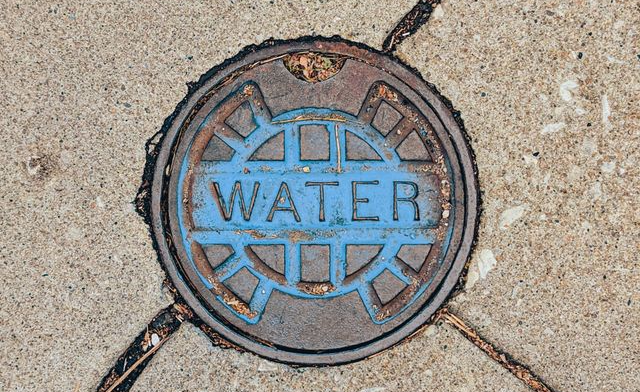
According to the facts described in the court’s opinion, the plaintiff was walking home from a dinner party in downtown Miami on May 24, 2019, when she stepped into and fell through an uncovered county-owned water meter box. The record reflected that she did not take photographs the night of the incident and went to the emergency room the following morning for treatment.
The evidence described in the court’s opinion showed that two days later, on May 26, 2019, the plaintiff returned to the site and took a photograph of the water meter box, which was then covered and cracked. The allegations in the case indicated that in July 2019, she returned again, removed the cover, and took several photographs of the water meter box. One of these photographs showed brown leaves inside the box, though there was no evidence indicating when or how the leaves entered the water meter box.
At trial, the plaintiff presented testimony from Miami-Dade Water and Sewer Department employees. According to the court’s opinion, a customer service manager testified that meter readers are trained to inspect the boxes they service. Two water meter readers testified about their daily workload – one reading between 60 and 800 meters per day, while another read between 300 and 500 meters daily. The chief of water meter installation testified there were no records of complaints, repairs, or inspections for the subject meter box before the accident.
The county’s defense included testimony from a claims administrator who handles water meter box inspections. According to the court’s opinion, this witness testified that “water meter boxes often contain leaves, which can enter through the sides of the lids when the lid is properly on or when the cover is removed.” A customer service representative testified that monthly and quarterly reports for water meters in the area showed no missing covers prior to the incident, though on cross-examination acknowledged the reports did not include the specific meter box where the incident occurred.
The Court’s Analysis
The Problem with “Stacking Inferences”
The appellate court found that the plaintiff’s evidence required too many assumptions to prove the county had constructive notice. The court explained that to conclude Miami-Dade County had constructive notice of the missing water meter cover before the plaintiff’s accident, “the jury would need to draw, at a minimum, the following inferences: (1) the leaves shown in the July photograph entered the water meter box while the cover was missing; (2) the leaves were initially green when they entered the box; (3) the leaves did not enter the box when the lid was on; (4) the leaves entered the box prior to [the plaintiff’s] fall; (5) the leaves were inside the box at the time of the fall; and (6) a reasonably diligent inspection by the County would have revealed the missing cover before the accident occurred.”
Critical Distinction: Florida courts prohibit “stacking inferences” – building one assumption on top of another to reach a conclusion. Each inference must be supported by concrete evidence, not speculation.
Why the Photograph Evidence Failed
The court emphasized that the photograph of brown leaves taken two months after the incident “alone provides no evidence that the alleged condition—a missing water meter cover—existed for a sufficient length of time before [the plaintiff’s] fall without relying on impermissible stacking of inferences.”
The court cited Tallahassee Medical Center, Inc. v. Kemp, explaining that “Plaintiffs may not stack inferences upon a debatable inference drawn from circumstantial evidence… This rule against stacking inferences protects litigants from verdicts based on conjecture and speculation.”
The “Sufficient Length of Time” Standard
The appellate court noted that while the plaintiff cited internal county policies requiring inspection of water meter boxes, “she offered no evidence regarding how long the defective condition—the missing water meter cover—existed prior to her fall.” The court explained that “leaves found months later do not establish they were present at the time of her fall so as to place the County on notice that the condition had existed for a ‘sufficient length of time.'”
Frequently Asked Questions
What kind of evidence do I need to prove constructive notice?
You need concrete evidence showing how long the dangerous condition existed before your accident. This might include maintenance records, witness testimony about prior complaints, photographs showing deterioration over time, evidence that similar problems occurred regularly in the area, or circumstantial evidence that could support a finding that the condition existed for some time.
Can I use photographs taken after my accident as evidence?
Photographs taken after an incident can be useful, but they have limitations. As this case shows, photos taken months later may not prove the condition existed at the time of your accident. The closer in time to your incident, the more valuable the photographs become.
What does “stacking inferences” mean and why is it prohibited?
Stacking inferences means building one assumption on top of another to reach a conclusion. Florida courts prohibit this because it leads to verdicts based on speculation rather than evidence. Each step in your legal argument must be supported by concrete proof, not guesswork.
The Takeaway for Injury Victims
The decision underscores the importance of gathering evidence that can show how long the dangerous condition has existed.
Contact Maderal Byrne & Furst PLLC today for a free consultation.
Case Reference
Miami-Dade County v. Martin, No. 3D24-2079, 2024 WL [to be assigned] (Fla. 3d DCA Dec. 10, 2024).
LEGAL DISCLAIMER: This blog post is provided for general informational and educational purposes only. It does not constitute legal advice and does not create an attorney-client relationship. The law is subject to change, and the application of legal principles varies depending on the specific facts of each case. If you have questions about your specific situation, you should consult a licensed Florida attorney. This post discusses legal concepts and principles addressed in the cited court opinion and context of that opinion. It is not intended to make any assertions about the truth of any allegations or evidence relating to any party to that case.
Citations & Sources
- Wilson-Greene v. City of Miami, 208 So. 3d 1271 (Fla. 3d DCA 2017)
- Maryland Maint. Serv., Inc. v. Palmieri, 559 So. 2d 74 (Fla. 3d DCA 1990)
- Tallahassee Med. Ctr., Inc. v. Kemp, 324 So. 3d 14 (Fla. 1st DCA 2021)
- Nielsen v. City of Sarasota, 117 So. 2d 731 (Fla. 1960)
- Miami-Dade Cnty. v. Hoyos, 874 So. 2d 639 (Fla. 3d DCA 2004)
- Grier v. Metro. Dade Cnty., 660 So. 2d 273 (Fla. 3d DCA 1995)
- Hernandez v. Mishali, 319 So. 3d 753 (Fla. 3d DCA 2021)
Source: https://flcourts-media.flcourts.gov/content/download/2482333/opinion/Opinion_2024-2079.pdf
